Finance Australia :: Articles

Good Debt Versus Bad Debt

What is the difference between good debt and bad debt?

Good Debt Versus Bad Debt

The information on this website is general in nature and does not take into account your objectives, financial situation, or needs. Consider seeking personal advice from a licensed adviser before acting on any information.

Some people see debt as a curse. Others see it as a friend. Debt can make you miserable, or it can be used to make you wealthy beyond your wildest dreams. The trouble is, how do we know what is good and what is bad?

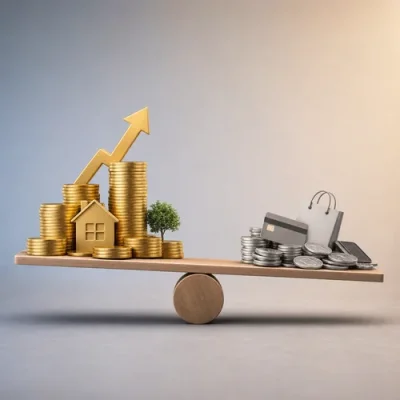
Well it basically boils down to this. Good debt puts money in your pocket after you have paid for the debt (interest), and bad debt takes money from your pocket on an ongoing basis.

In todays society, the world has gone through an explosion in bad debt. In the United States for example, for every $1 a person earns, they spend $1.20.

In Australia things are getting worse too. We spend $1.02 for every dollar earned. Back in the 1980's we would earn $1 and save 20c.

Bad Debt

Debt Stressed?
Image for Debt Stressed?If you're struggling to pay your debts and covering living expenses, we're here to help. Through our national panel of Debt Management specialists, we can help customers with $10k or more in debt by consolidating your existing loans, stopping Debt collectors from contacting you and re-negotiating repayments on your terms!

The single most influencing factor in this curse of bad debt is the credit card. It is so easy to get a credit card these days, and even school kids have them. Most people I know have several of them, and you know what, they max them all out. People get caught in this vicious circle of paying one card off with another, and still the interest bill compounds at an alarming rate.

It is not only credit cards that are doing the damage, it is also the ability to get three years interest free furniture and home appliances with no money down. This is a huge trap, and when people live beyond their means and do not have the means to pay back their debt in the given time they are hit with massive interest rates and so the cycle continues.

So that is bad debt, and I didn't even include cars, holidays and clothes, all charged up on your card! You get the picture.

Good Debt

Now onto good debt. Personally, I love good debt, and any wealthy person will tell you the same thing. With good debt you can purchase income producing assets that put cash in your pocket, even after the interest bill is paid.

Some examples of this include property, shares and stocks, and your own business. It even includes things such as art, wine and other rare collectibles.

By leveraging other peoples money to buy such things, you are after a time able to put yourself into a fantastic financial position, and you can now begin to pay cash for those bad debt items like expensive clothes and exotic holidays.

When I was at school there was never any lessons on good and bad debt, and I'm pretty sure they still do not teach effective money and debt management.

It is unfortunate that in a society such as ours, that the government does not teach this to every man, woman and child as it has a massive impact on our lives. Just look at the sub prime fallout in the States to see how people who overextended themselves are now really in trouble.

There is a way out if you are in bad debt, and there are resources out there to financially educate yourself before you do get into any trouble.

We only have ourselves to rely upon to shape our financial future, and the longer we leave it the harder it gets. Eradicate the bad debt from your lives, and begin to live without that heavy weight around your neck.

Published: Wednesday, 25th Aug 2021
Author: 95


Finance Articles

An Insider's Guide to Enhancing Your Credit Profile for Any Loan
Having a robust credit profile is one of the most critical factors for financial health, especially when seeking loans in Australia. Whether you're eyeing a new car, dreaming of a home or simply want to secure a personal loan for unexpected expenses, your credit score often dictates the outcome. Not only does it influence a lender's decision to offer you finance, but it also affects the interest rates you might be charged. - read more
The Great Debate: Pros and Cons of Refinancing Your Home Loan
In recent years, refinancing has emerged as a popular financial strategy for many Australian homeowners. With the housing market's dynamic nature and fluctuating interest rates, more people are considering the benefits of refinancing their home loans. This trend is not surprising, as refinancing can potentially reduce monthly payments, secure lower interest rates, and assist with debt consolidation. - read more
The Role of Business Insurance in Protecting Your Australian Enterprise
Starting and running a business in Australia can be an exhilarating experience, full of opportunities for growth and success. However, it also comes with its fair share of risks and uncertainties. From unexpected natural disasters to potential legal disputes, the threats to the sustainability of a business are ever-present. This is where business insurance becomes pivotal as a protective tool for Australian enterprises. It provides the much-needed safety net to help businesses mitigate potential losses and continue operations with confidence. - read more

Finance News

Australian Mortgage Market Reaches Record $2.41 Trillion Amid Rising Property Prices
11 Jan 2026: Paige Estritori
In November 2025, Australia's residential mortgage market achieved a new milestone, with authorised deposit-taking institutions (ADIs) collectively holding $2.41 trillion in home loans. This represents a 0.67% increase over the month and a 6.36% rise over the preceding year, as reported by the Australian Prudential Regulation Authority (APRA). - read more
APRA Implements Cap on High Debt-to-Income Home Loans to Safeguard Financial Stability
11 Jan 2026: Paige Estritori
The Australian Prudential Regulation Authority (APRA) has announced a significant policy change aimed at mitigating emerging risks in the housing market. Effective February 2026, APRA will impose a cap on high debt-to-income (DTI) home loans, limiting banks to issuing no more than 20% of new home loans with DTI ratios of six times or higher. This measure applies to both owner-occupier and investor loans, excluding new housing developments. - read more
Australian Home Prices Hit Record Highs in December 2025
11 Jan 2026: Paige Estritori
In December 2025, Australia's housing market reached a new peak, with the national median home price climbing to $880,000, reflecting an 8.8% increase compared to the previous year. This growth was driven by varying performances across different regions, with regional areas outperforming capital cities. - read more

Free Loan Eligibility Assessment

Loan Amount:
Postcode:

All quotes are provided free and without obligation by a specialist from our national broker referral panel. See our privacy statement for more details.


Knowledgebase
Margin Call:
A demand by a broker that an investor deposit additional money or securities into the account to cover possible losses.