Finance Australia Caravan Loan Repayment Calculator
Plan your next adventure with our Caravan Loan Repayment Calculator. Estimate repayments, view amortization charts, and compare finance options with ease.
Calculator results are estimates based on the inputs and assumptions used and are provided for general information only. They are not quotes, offers, approvals, eligibility decisions or personalised recommendations. Actual costs and repayments may differ.
Caravan Loan Details:
Important!
Caravan Loan Interest Rates differ from lender to lender and will depend on your individual circumstances (credit history, employment status, age, etc.).
Caravan Loan Amortisation Calculator
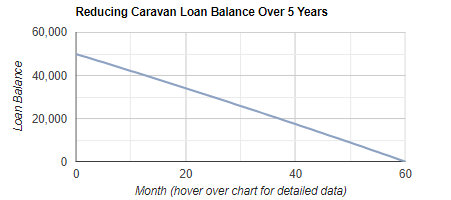
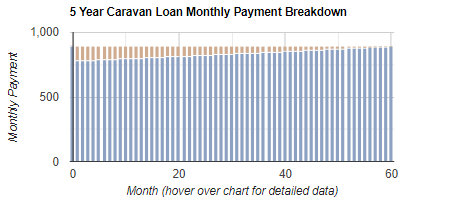
The following amortisation graphs detail month-by-month data on the progress of the proposed loan. The first chart below examines the reducing loan balance over the course of the finance contract term. The second graph illustrates the portion of each monthly repayment allocated to payment of interest vs principal reduction.
How to use our Caravan Loan Repayment Calculator
Our Caravan Loan Repayment Calculator helps you estimate your likely monthly caravan loan repayments, understand how much interest you may pay over time, and visualise your loan via amortisation charts. It’s important because small changes to your purchase price, deposit, loan term or interest rate can materially affect cash flow and the total cost of caravan finance, helping you plan a realistic budget before you apply.
How to complete the form for the best result
1. Purchase Price
Enter the full caravan purchase price you expect to finance. If you plan to roll costs into the loan, consider adding likely upfront expenses such as registration, insurance and other on-road costs (where applicable). Use whole numbers only (no decimals or commas) to match the calculator format.
2. Deposit or Trade-in Value (if applicable)
Add any cash deposit and/or the trade-in value of an existing caravan. If you have no deposit or trade-in, leave this field blank. A higher deposit generally reduces the amount borrowed and can lower repayments and total interest.
3. Term of Loan (years)
Select the number of years you want to repay over. Longer terms usually reduce monthly repayments but increase the overall cost of the loan due to more interest over time. Choose a term that fits your budget with a buffer for rate rises and living costs.
4. Interest Rate (percent per annum)
Select an interest rate to simulate. The listed range is indicative only and your actual rate can only be confirmed after you apply, based on factors like credit history and employment.
5. Calculate
Click calculate to generate your estimated repayment and amortisation charts.
How to interpret the results
1. Repayment estimate
Use the monthly repayment figure as a budgeting guide, then compare scenarios by adjusting the term, deposit and interest rate.
2. Amortisation charts
The loan balance chart shows how your debt reduces month by month. The interest versus principal chart highlights that early repayments typically include a higher interest portion, with more of each payment going to principal later in the term.
Important information (ASIC-style general guidance)
Results are estimates and do not constitute a quote. They may not include fees, charges, or lender-specific features. This information is general and does not consider your objectives, financial situation or needs. Consider whether a caravan loan is appropriate for you and seek personalised advice if required. Credit is subject to approval and terms and conditions.
Debt consolidation is a strategy often utilized by individuals seeking to take control of their financial health. At its core, debt consolidation involves combining multiple debts into a single, more manageable loan, typically with more favorable terms such as a lower interest rate or a longer repayment period. - read more
Welcome to the world of savvy home financing! Whether you’re a first-time homebuyer or seasoned investor, navigating the ocean of home loan options can be daunting. In this digital era, one tool stands out for its effectiveness in simplifying this journey: the online home loan calculator. - read more
A practical guide to the main types of business finance available in Australia, including term loans, lines of credit, overdrafts, invoice finance, equipment finance, and secured or unsecured lending. - read more
APRA’s latest banking indicators point to a lending market that is still open, but not loose. Mortgage credit continues to move through the system, yet the regulator’s focus on serviceability, risk controls and higher-risk lending means borrowers should expect applications to be examined carefully rather than waved through on headline income alone. - read more
Australia’s latest national accounts have given borrowers a fresh read on the economy: growth is continuing, but momentum remains uneven and household spending is still being tested by higher living costs. For anyone weighing up a personal loan, home loan refinance, vehicle finance or business funding, the message is less about one headline number and more about how stable income, expenses and cash flow look over the next year. - read more
Fresh lending and banking indicators are giving Australian borrowers a timely reminder: the headline interest rate is only one part of the finance decision. While some lenders have been adjusting selected offers and competition remains visible in parts of the market, arrears and repayment stress are still important signals for households and small to medium-sized businesses planning their next move. - read more
Equity Release: A way for homeowners to release cash from the value of their home, either as a lump sum or in installments, while still living in the property.